In depth · club history
St Andrews Links and the Old Course: the home of golf
Golf has been played on the links at St Andrews since the early 15th century, and the Old Course still shapes how the game is laid out, ruled and watched.
By the ULTIMATE Golf Editorial Team
The story
St Andrews is the place most golfers mean when they say the home of golf. The sport was being played on its links in the early 15th century, on common ground beside the North Sea, and the courses there are still run for the town and for visitors rather than for a single private club.
The right to play was written down early. In 1552 Archbishop John Hamilton gave the townspeople of St Andrews permission to play on the links, and later local and royal charters confirmed it. That public character is why the Old Course is held in trust today by the St Andrews Links Trust.
How the Old Course took shape
No single architect drew the Old Course. It grew with the game, and for many years golfers played out and back over the same fairways to the same holes, so that groups often met head-on. In 1764 the captain of the Society, William St Clair of Roslin, authorised changes that combined the short opening and closing holes; St Andrews then had 18 holes, and that is how 18 became the standard.
Old Tom Morris, who is credited with designing the 1st and 18th holes, left his mark on the finishing stretch. The name came later: the links was simply the golfing grounds until the New Course opened in 1895, when the original became the Old Course.
The links in danger, then saved
Its survival was not guaranteed. The links went bankrupt in 1797, and the town council allowed rabbit farming on the ground. Some twenty years of dispute between golfers and rabbit farmers ended in 1821, when a local landowner and golfer, James Cheape of Strathtyrum, bought the land. He is credited with saving the links for golf.
The land passed in 1893 to the Royal and Ancient Golf Club, and an act of Parliament in 1894 regulated control of the links. A later act created the St Andrews Links Trust, which now runs eight public courses beside the Old.
The R&A, the Open and the bridge
The Society of St Andrews Golfers was founded in 1754 by 22 noblemen, professors and landowners, and became the Royal and Ancient Golf Club. Its clubhouse stands beside the first tee. In 2004 the club handed its rule-making and championship roles to the R&A, which is based in St Andrews and organises The Open Championship.
The Open has been played over the Old Course 30 times since 1873. In 1927 Bobby Jones returned to win it, having walked away from the 1921 Open after a bunker on the 11th, and in 1930 he won the British Amateur here on his way to the Grand Slam. The town gave him the key to the city in 1958.
Then there is the Swilcan Bridge, a small stone bridge over the burn on the 18th that champions have long paused on for photographs. Jack Nicklaus said his farewell to professional golf there at the 2005 Open.
Visiting
The ULTIMATE Edinburgh guide lists St Andrews among its day trips: ScotRail from Waverley to Leuchars, then a short bus or taxi into town. Beyond the Old Course there are the cathedral ruins and the town itself, and the Old Course Hotel and Fairmont St Andrews for an overnight stay.
Our advice: walk out to the Swilcan Bridge in the evening, when play has finished, as the Edinburgh guide suggests.
Play it: St Andrews Links: the course, visitors and how to book →
Heritage nearby: The R&A World Golf Museum, Heritage of Golf Museum, Gullane · On screen: Chariots of Fire
Sources
- St Andrews Links: the Home of Golf
- Wikipedia: Old Course at St Andrews
- Wikipedia: St Andrews Links
- Wikipedia: The R&A
- Wikipedia: Swilcan Bridge
- ULTIMATE Edinburgh guide
Checked 2026-11-14. Every fact here comes from a source above; where sources disagree on a date or a name, we leave it out.
More club histories
All histories →
Real Club Valderrama
A Robert Trent Jones Sr course on the Andalusian coast that was rebuilt in the 1980s and became the setting for Europe’s 1997 Ryder Cup.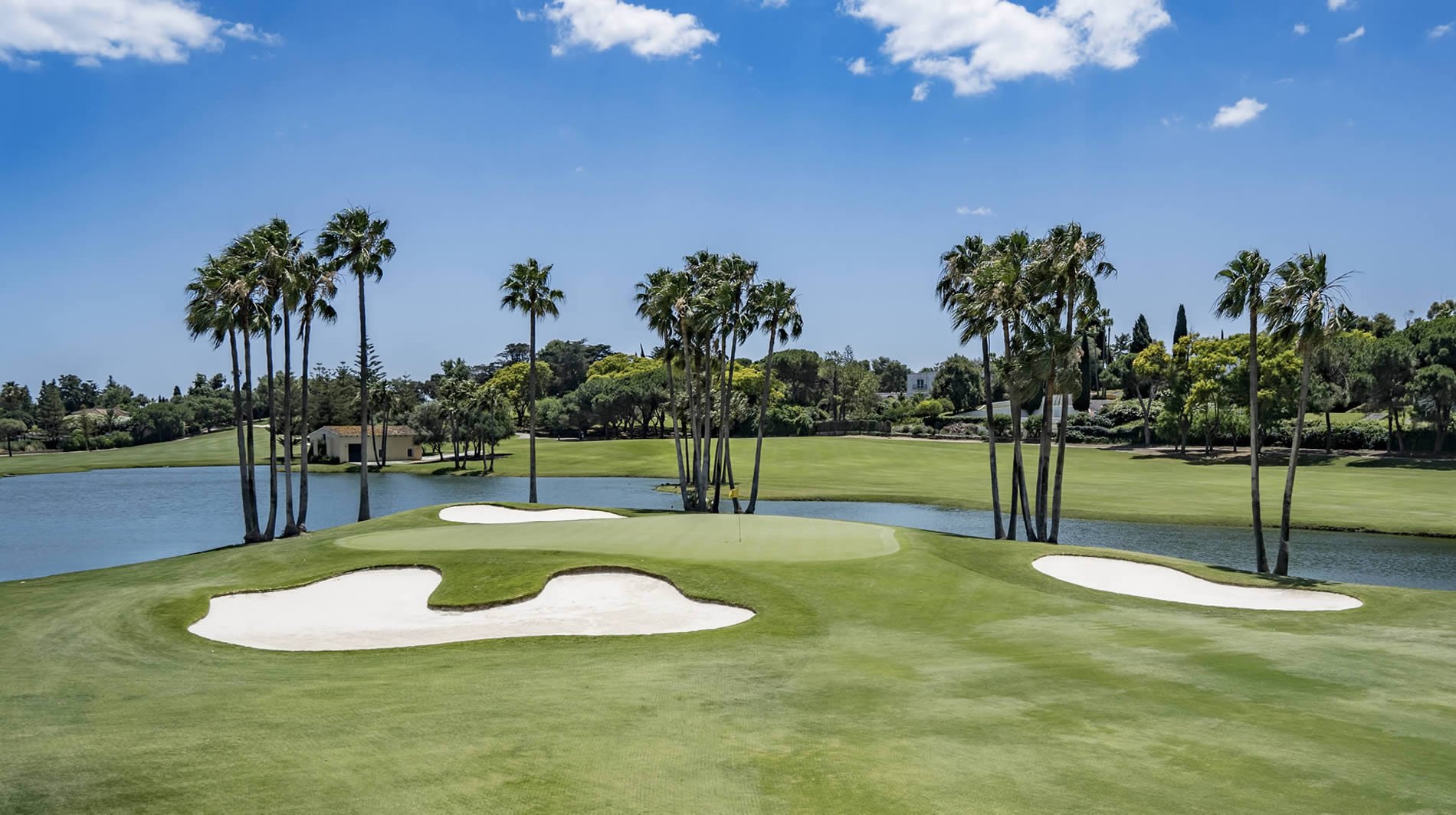
Real Club de Golf Sotogrande
Opened in 1964 as the heart of a new residential estate, Sotogrande was Robert Trent Jones’s first European course.